
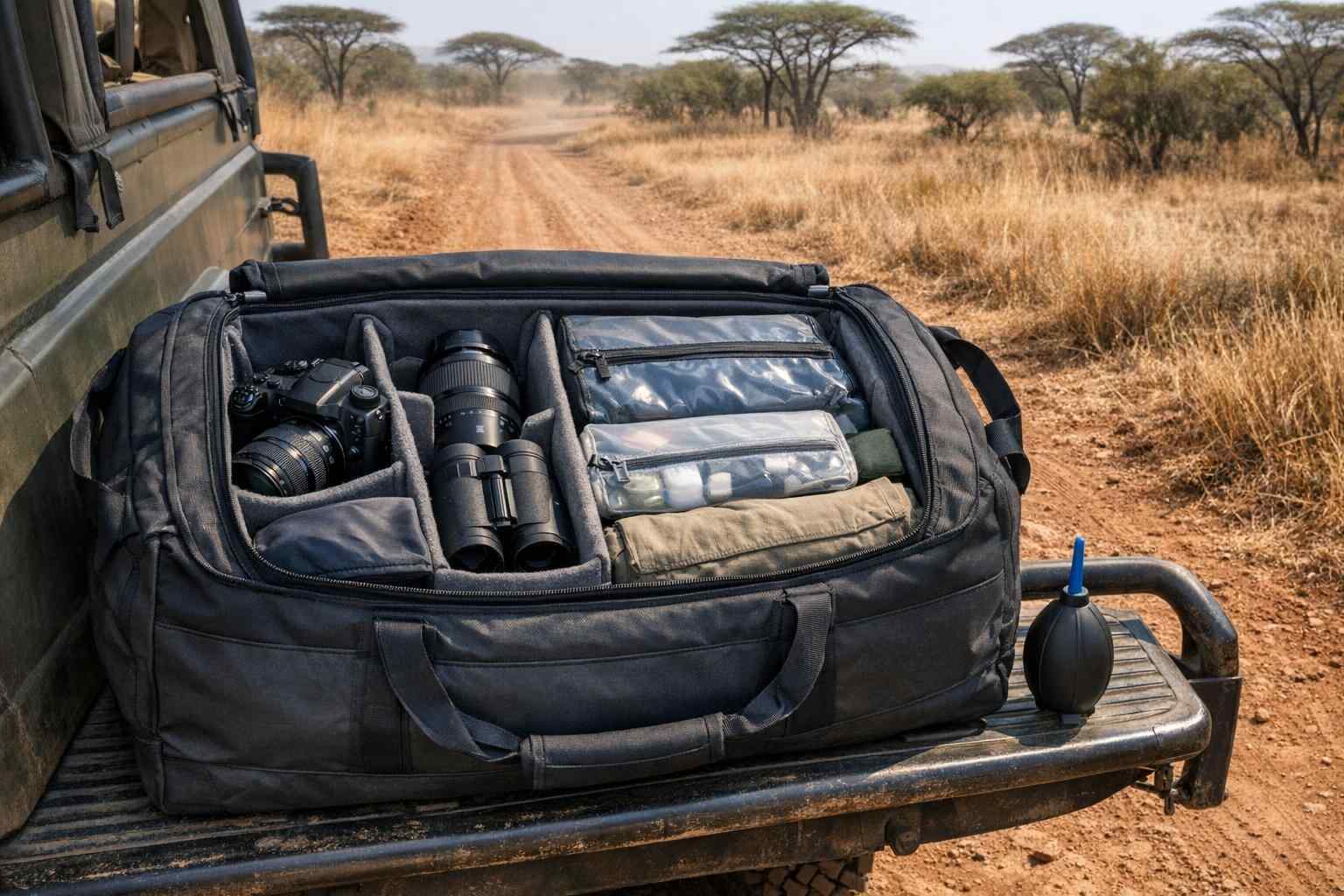
Dust can enter into the zips of your luggage, into the controls of your camera, into the seams of your clothing and into the corners of your luggage cases. And once it has gotten into your equipment, it travels home with you in your gear. Good packing for an African safari therefore is not about taking lots of accessories. Rather it involves trying to separate the items that could suffer damage in travel, choosing the right container for the job, and establishing a clean up process that will not cause too much hassle in the end.
Start with a dust-resistant packing system
Soft luggage is generally better for enveloping large amounts of Flexi gear, allowing greater flexibility for cramped luggage restrictions, but does not protect as well as rigid-sided luggage from crushing or other forms of physical abuse. A combination of both soft and rigid-sided luggage is best, choosing the type that best suits the mode of travel, amount of gear and expected abuse. A soft duffel is good for traveling between safari vehicles and lodges. Rigid-sided hard cases are much better for items of delicate nature or traveling long distances by road where cases are subjected to physical abuse and stacked on top of each other.
Covered zips, strong handles and a surface that can be wiped clean are all important when looking for a new bag. The exterior of soft bags can have lots of pockets and webbing but often these can collect dirt and be hard to clean. A brightly colored bag is easy to pick out of a crowd but may show up dirt quickly – a dark colored bag will hide the dirt but that does not mean that the bag won't collect dirt. Open up the bag and have a look at the seams. Can you clean it without any special products?
One simple way to keep clean clothing apart from shoes, layers for the field, and other gear that has been exposed to the elements throughout the day is to store each in its own small dry bag, or even just use ziplocked pouches or even washable packing cubes to split up the load of the main case.
Protect cameras without trapping moisture
Cameras, lenses, and even binoculars need their own way of packing. Using a padded insert will protect the items from getting knocked about but does not necessarily protect from dust. So make sure to keep the caps on all the optic when not in use. Store spare caps in your pockets to prevent them getting covered in dust as well. A small blower and a good clean lens cloth is all you need to keep your optics clean, rather than constantly wiping away the same dust spots.
Never wipe a dry visibly dusty surface with a cloth. First blow the surface clean with a can of clean air, then proceed to clean the surface as normal. Remember to store your cloths in a sealed bag when not in use to stop them from picking up sand from your clothing etc.
After you have returned from your day's outing, open up the cases in which you have stored your gear in a clean, shaded area and allow it to settle for a while before packing it away for the night. Also, do not store hot items against cold surfaces and, furthermore, do not seal a damp item in an airtight bag/s for an extended period.
Don't constantly change lenses for example while wandering around in the field looking for a good shot. Once you've changed a lens, ensure that the camera body is covered by the lens cap. Don't blow away dust with a stream of air unless you are absolutely sure that there won't be any debris to go anywhere else.
Choose clothing and personal items for easy recovery
Care should be taken to select clothing items that can be worn more than once and will easily clean. Repeat use of items can reduce the amount of items that are required to be washed and in some cases even air dried. A light weight overshirt can also be very useful as it allows the arms and camera strap to be protected from dust while at the same time allowing for simple access to a frequently used pocket.
Make sure that you pack your footwear in separate, washable sacks. Remove as much dirt as possible from your shoes before placing them in your luggage and make sure you have a small plastic or reusable bag to line particularly dirty items such as muddy walking boots. These items should be packed separately from your clean clothing and laundry and ideally not in the same large bag.
Toiletries and small electronic devices should be packed in separate, dry and closed bags. Liquids should be double-bagged and cable organizers for charging devices stored in closed bags. Reading glasses, cameras, cards and batteries should be stored away from potential sources of dust in a closed pouch. Batteries should be treated with the same care as for normal travel and in accordance with the latest airline / transport operator's requirements – check with the official website of the carrier before departure.
Build a cleaning kit that matches the trip
A basic 'maintenance kit' consists of a soft brush, a blower, some Microfibre cloths (in separate bags), a few extra seals for a bag, a headlamp and a towel. Spare labels and a spare strap repair item (such as a spare puller or loose strap, or a patch for a torn pouch) can also be worth carrying. Remember that you're looking to repair minor problems with your gear, not to do a full workshop service!
Store a separate supply of cleaning cloths for lenses, hands, and the exterior of cases. Although it may seem better to carry more cleaning cloths, washing and reusing a single cloth is generally more effective than carrying many. Remember to clean your cloths between uses and to bring them with you as you move from accommodation to accommodation.
Sprays and other household products with oily or even just wet bases should be avoided altogether as they tend to leave behind residue that will attract dirt. Opt for a soft dry brush for dusting off interior surfaces of your luggage, and for more stubborn dirt use a damp cloth only. Avoid scrubbing the exterior of luggage, especially surfaces with waterproof coatings, and pay particular attention to the seams and zips.
Decide what stays accessible during transfers
Day Use – Same Bag with Essentials. Pack a small day bag containing items you would normally use such as water, sun screen, binoculars, camera, lens cleaners, and a spare outer layer. This would include the cleaning items listed above and operate under the travel restrictions of the operator you are using. A separate document pouch can be used for items like passports, permits, etc and should be kept in an area separate to equipment and checked for current entry, transport and hunting requirements with the relevant authorities before travel.
Just because you can pack everything in one case, doesn't mean you should. Keeping essential items in a separate daypack and in your hand will mean that should your main luggage get lost or delayed en route, you'll still have what you need to continue your safari adventure. Be sure to include a basic charging system, medicines and travel documents that you are allowed to carry according to your mode of transport.
At the end of the day avoid unpacking everything in a very dusty camp. First remove your boots and outdoor clothing. Wipe the outside of your travel bag or case with a cloth and then check your valuable travel items for dirt etc. Then close up all your clean storage bags. This all takes about 5 minutes.
The best gear for a safari is in some cases not the toughest or most expensive but rather the one that you can use in the given circumstances of your trip, that you can clean with the gear you have with you and that functions when things do not go as planned.