
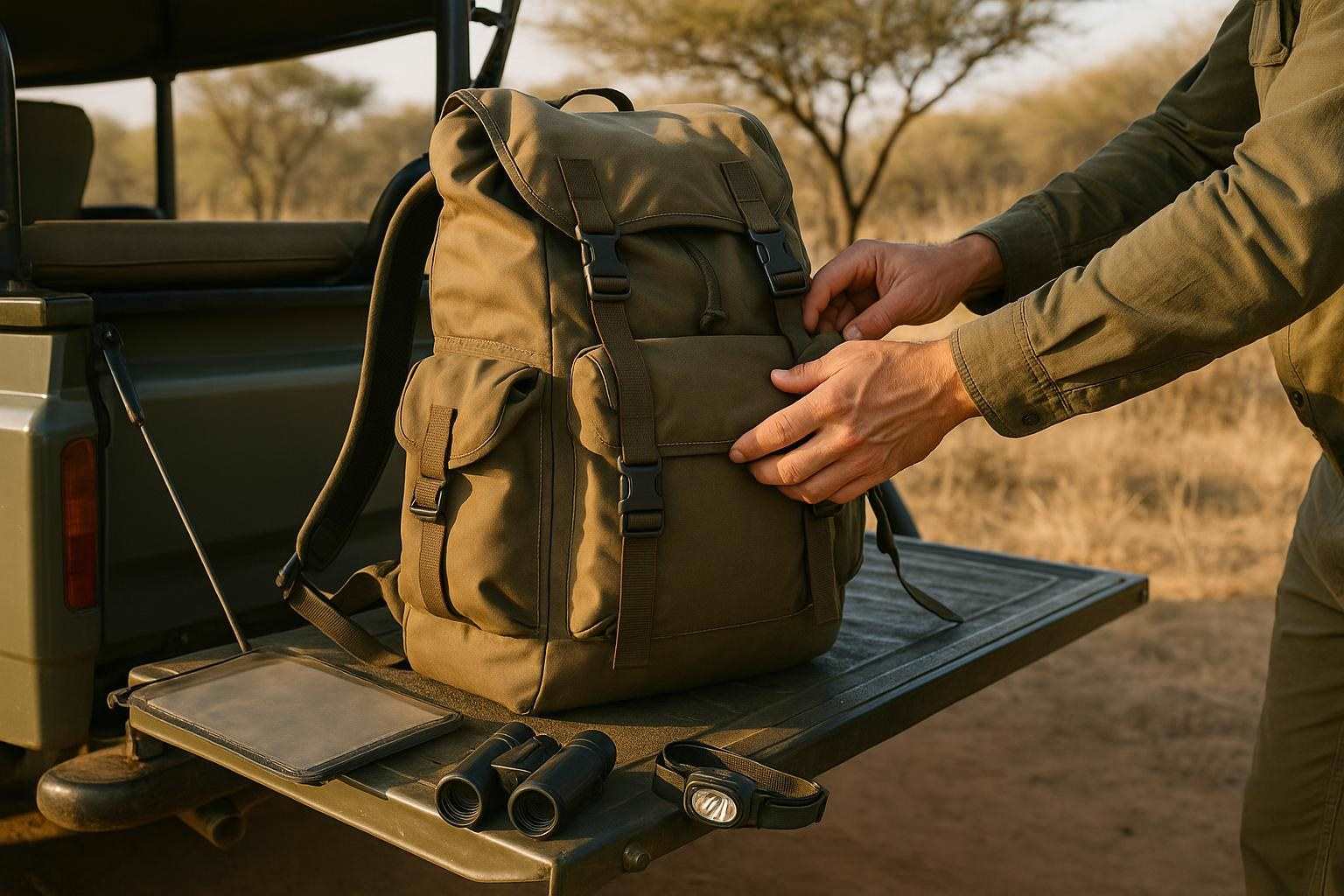
A missing document, a fitted pack or an unchecked scope can turn a planned outing into delays and second‑guessing. For newcomers good preparation is less, about buying more and more about confirming what you will use understanding the rules and deciding what to do when conditions change.
Start with the trip not the shopping list
Before checking equipment define the outing. Is it a walk from a vehicle days at a remote camp or a guided safari where some equipment is supplied? Climate, terrain, walking distance, accommodation and transport all affect what you need. A heavy pack may suit an approach. Become a poor choice on long days over uneven ground.
Ask the outfitter, professional hunter or land manager for an equipment list. Separate essentials from preferences and confirm what is supplied what you must. What can be replaced locally. This prevents gear. Reveals gaps while there is time to fix them.
Choose clothing for movement changing weather and easy layering than appearance. Break in boots gradually but replace them if the sole is separating the heel is unstable or rubbing continues after adjustment. Test your rain layer, headlamp, water containers hearing protection and first‑aid supplies before packing.
Give equipment a working inspection
The important question is not whether an item looks new but whether you can operate it reliably without looking for instructions in the dark or finding a fault from support.
Inspect equipment according to the manufacturers guidance. Check straps, buckles, stitching, batteries, lenses and closures. Store spare batteries in a protected clearly marked place. Keep documents in a waterproof sleeve. If you use a rifle have it. Checked in a controlled setting by a suitably competent person. Do not rely on a zero, a borrowed scope setting or memory from a season.
Practice non‑shooting routines well: adjusting the pack using binoculars moving quietly through brush applying insect protection and retrieving items without emptying every pocket. If you are unfamiliar with a firearm obtain instruction before the trip. Safe handling, storage and transport must follow law and the instructions of the guide or authority.
A useful gear rule is to keep an item only if it solves a problem better than the weight, cost or complexity it adds. A compact repair kit may earn its place; several untested gadgets usually do not.
Prepare your body for the workload
Fitness preparation should reflect the walking, carrying, heat and uneven ground you expect not imitate an expedition. Build work into your routine and add basic strength for your legs, hips, back and shoulders. Walk with the pack you expect to carry increasing the load gradually than starting at its maximum.
Pain, unusual breathlessness, dizziness or recurring foot problems deserve medical advice before travel. Heat, dehydration, poor sleep and unfamiliar food can reduce judgment so plan water access, sensible meals and rest. If you take medication confirm its storage needs. Carry enough for the journey with a contingency arranged through the medical professional.
Practice patience as movement. A long pause, observation or decision not to continue may be part of a day. Arriving tired or rushed can make you careless with equipment and less able to assess a shot.
Set ethical limits before the pressure arrives
Hunting ethics are easiest to follow when decisions are made before excitement, fatigue or group pressure takes over. Know the species, sex, age and trophy restrictions that apply and ask how an animal is identified before any shot is considered. If identification is uncertain wait.
Discuss shot opportunities and follow‑up procedures with the guide or land manager in advance. A responsible plan covers a miss, wounded animal lost track or sudden change in visibility. Never treat a recovery as a reason to take a shot or cross a boundary without permission.
Respect more than the quarry. Leave gates and water points as you find them avoid disturbance to livestock and non‑target wildlife and remove rubbish. Observe customs and community rules including restrictions on vehicle travel and walking areas. Conservation includes habitat use and honest reporting when something goes wrong.
Recheck regulations and paperwork close to departure
Rules can change and permission in one place does not automatically apply elsewhere. Requirements may differ between countries, provinces, reserves, private properties and transport authorities. Confirm permits, season dates, species conditions, transport rules, firearm or ammunition requirements, import documents, health paperwork and insurance terms through the official authority and licensed outfitter.
Repeat this check close to departure even if the booking was made ago. Keep copies offline but carry required originals. Ensure names, passport details permit information and travel dates match. Ask who is responsible for each document; assuming someone else checked it is a source of trouble.
Use this newcomer hunting checklist before leaving:
– Confirm the itinerary, emergency contact and meeting points.
– Verify regulations, permits and transport requirements.
– Inspect and test essential clothing, optics, lighting and communication equipment.
– Check footwear, pack fit, water capacity and weather protection.
– Review firearm safety, storage and transport arrangements, with a qualified professional.
– Agree on boundaries, identification standards and follow‑up procedures.
– Leave a trusted person the route dates and contact details.
Good preparation will not remove uncertainty from hunting. It should not try to. It gives you margin to pause ask questions and make a safe and considerate decision when the day does not follow the plan.